Oregon Agriculture in the Classroom Logo

Featured Resources

Categories

Type

Grade Level

  • Time for CranberriesLogin to Hold

    Total Available: 12 (of 7)

    Must be returned

    Time for Cranberries

    Lisl H. Detlefsen

    From the cranberry bog to the Thanksgiving table, join Sam and his family as they harvest a classic American fruit. When the vines hang heavy with berries that the autumn winds have turned deep red, it's time for cranberries, and Sam is finally old enough to help with the harvest! This charming, lyrical picture book follows Sam and his family as they raise the water in the bog, pick the cranberries, and gather the fruit for processing. It's a story of modern family farming in action, showing readers where their food comes from but mostly delighting them along the way! This book will need to be returned.
  • To MarketLogin to Hold

    Total Available: 4 (of 4)

    Must be returned

    To Market, To Market

    Nikki McClure

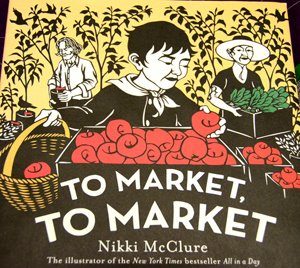
    Today is market day.  We hear the bell ringing. Everyone is gathering. The whole town is here ready to celebrate the joy of food. As a young boy and his mother shop for apples and cheese, smoked salmon, and green kale, the author shows how each item is grown or made and introduces the farmers and artisans who work so hard to fill tables and tummies. This book needs to be returned. 
  • Tomatoes - A True BookLogin to Hold

    Total Available: 3 (of 3)

    Must be returned

    Tomatoes – A True Book

    True Book Series

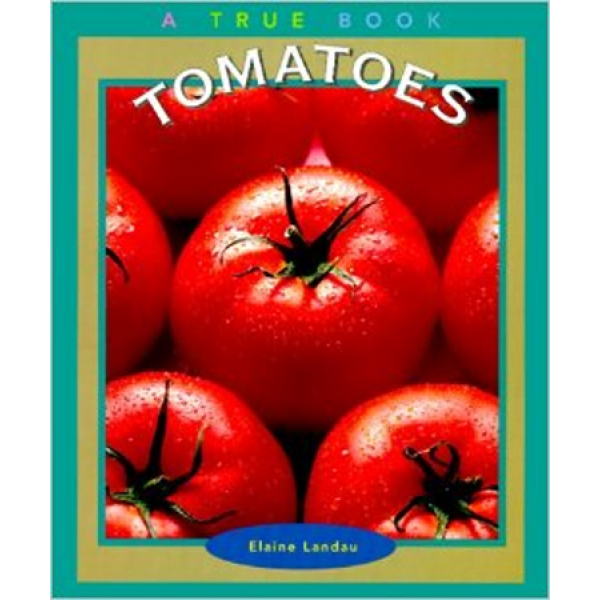
    This series offers a detailed look at specific agricultural commodities. This book focuses on tomatoes, including the history, the business of tomatoes, and tomatoes as a healthy food choice. This book needs to be returned. 
  • Tomatoes Grow on a VineLogin to Hold

    Total Available: 7 (of 7)

    Must be returned

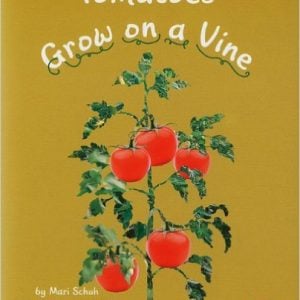
    Tomatoes Grow on a Vine

    Mari Schuh

    On the ground or up a fence, vines grow longer each day. Many fruits and vegetables grow on garden vines. Tomatoes are one of those! Readers learn about how tomatoes grow. Paired with beautiful images readers will feel like they are in the garden! Vocabulary words in this book include: fertilize, nutrient, pollen, soil, and many more. This book will need to be returned.
  • TomatoesLogin to Hold

    Total Available: 8 (of 8)

    Must be returned

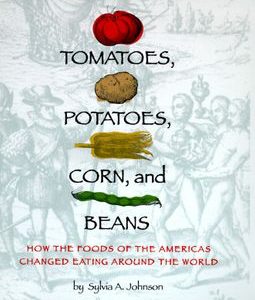
    Tomatoes, Potatoes, Corn, and Beans

    Sylvia A. Johnson

    Native American farmers were well acquainted with the plants that grew in their world. In ancient times, they had domesticated wild plants to produce many varieties of maize, potatoes, beans, and squash. These basic foods became staples in large parts of the Americas. The fat red tomatoes and glossy peppers that seemed so exotic to early European explorers were familiar crops to many native farmers. And Native American cooks knew hundreds of ways to prepare and serve their grains, fruits, and vegetables. This book will need to be returned.
  • Water: Sources · Use · ConservationLogin to Hold

    Total Available: 11 (of 11)

    Must be returned

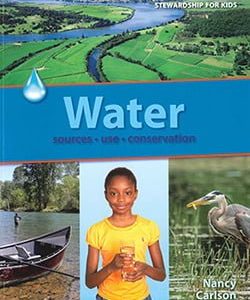
    Water: Sources · Use · Conservation

    Nancy Carlson

    This book introduces students to the one resource we cannot live without, but take for granted. Water explains, in an engaging student-friendly manner, the Hydrologic Cycle or Water Cycle. It explains the different states of water and how these states affects the world we live in. This book also discusses watersheds, river basins, and wetlands; and explains why irrigation is an important component of good water stewardship. This book will need to be returned.
  • Weaving The RainbowLogin to Hold

    Total Available: 9 (of 10)

    Must be returned

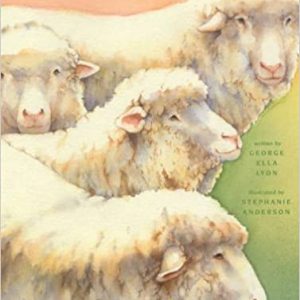
    Weaving The Rainbow

    George Ella Lyon

    Lyon  follows wool from sheep to loom, tracing the birth of a tapestry. In her first picture book, Anderson's sharp-edged yet airy illustrations show a weaver and her flock of white sheep, whom Lyon calls, mysteriously, "rainbow sheep." For their first year, Lyon concedes in graceful free verse, they were white. "But," she says, against a spread of sheep gazing toward the setting sun, "they were getting closer to the rainbow." This portentous phrase is left to resonate while Lyon describes the shearing, then the fleece itself: "White and springy this fleece, but carrying it from the pasture the weaver sees rainbows." As the weaver gathers plants and as the artwork depicts her hands preparing to drop the plants into steaming vats, readers realize the rainbow will appear when the wool is dyed; a magnificent spread shows the drying skeins hanging among blossoming apples trees. The weaver warps her loom and begins to weave—and the subject of the tapestry turns out to be ewes and lambs in a colorful pasture. This book will need to be returned.
  • Tops and BottomsLogin to Hold

    Total Available: 1 (of 1)

    Must be returned

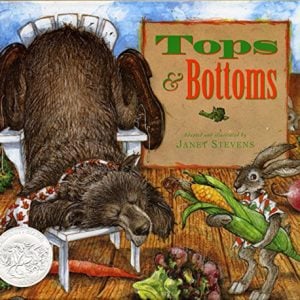
    Tops and Bottoms

    Janet Stevens

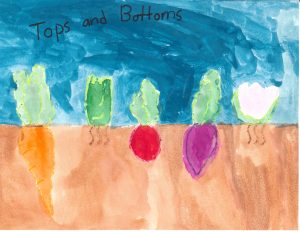
    Once a upon a time, there was a lazy Bear and a clever Hare. Bear had lots of money and lots of land but all he wanted to do was sleep. Hare had nothing but hungry children, so he came up with a plan to convince Bear to split his land down the middle—tops and bottoms. Hare can work all day and Bear can sleep. It’s the perfect solution! Or is it? Tops & Bottoms celebrates the trickster tradition of using one’s wits to overcome hardship. “As usual, Stevens’ animal characters, bold and colorful, are delightful. . . . It’s all wonderful fun, and the book opens, fittingly, from top to bottom instead of from side to side, making it perfect for story-time sharing." IsabellaD

    A student's depiction of Tops and Bottoms!

    This book needs to be returned. 
  • Trees are Terrific!Login to Hold

    Total Available: 2 (of 2)

    Must be returned

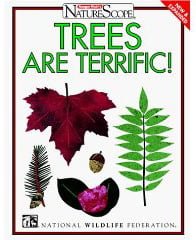
    Trees are Terrific!

    NatureScope

    Ranger Rick's Trees are Terrific! is a creative, activities-centered educational book dedicated to inspiring in children an understanding and appreciation of the natural world, while developing the skills they will need to make responsible decisions about the environment. This book needs to be returned. 
  • Trees to KnowLogin to Hold

    Total Available: 2 (of 2)

    Must be returned

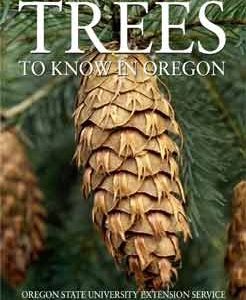
    Trees to Know

    Oregon State University Extension Services

    Get to know the trees of Oregon and learn how to identify them. This book needs to be returned. 
  • Where Should Development Go? PendletonLogin to Hold

    Total Available: 8 (of 4)

    Does not need to be returned

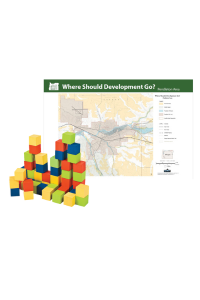
    Where Should Development Go? Pendleton

    Students learn about the challenges of planning for development while still protecting important farmland, forestland and wildlife habitat. This two-part lesson allows students to brainstorm creative solutions using critical thinking, math, teamwork and problem solving skills. This lesson includes six topography maps, a lesson and corresponding activity that has colored blocks to complete it with. This item does not need to be returned. Download Lesson Download Activity    
  • Growing Bracelets Kit

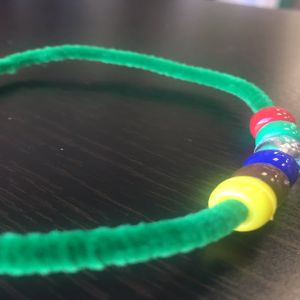
    In this kit, students learn what a plant need to grow and thrive, represented by a growing bracelet; each different colored bead is what a plant needs to live, and pipe-cleaner is the plant. Click here for the downloadable lesson plan.  This kit includes one pipe-cleaner and six different colored beads per student. This kit does not need to be returned.  This Kit Includes: Pipe cleaners, beads, and a paper lesson plan Please put the number of students in your class in the quantity section at checkout to ensure the correct number of supplies gets to you.
  • Desktop GreenhousesLogin to Hold

    Out of Stock. Backorder Available.

    Does not need to be returned

    Desktop Greenhouses

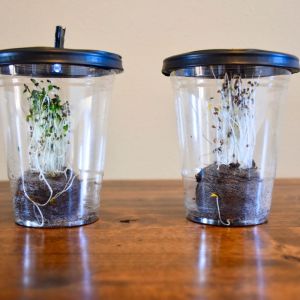
    Students investigate the importance of light to plants by creating a desktop greenhouse investigation and exploring the process of photosynthesis. This kit includes materials for six groups of students. For more resources and lesson plan: Desktop Greenhouses
  • PlaceholderLogin to Hold

    Out of Stock. Backorder Available.

    Does not need to be returned

    Up in the Garden, Down in The Dirt Kit

    Students explore the different pests and friends that are found in the garden and how they affect crops. This kit includes a class set of materials. This kit does not need to be returned.
  • Incubator [Washington County]Login to Hold

    Out of Stock. Backorder Available.

    Must be returned

    Incubator

    Brinsea

    There's limited availability for May! Please order on the website and email us to check availability!! Washington County educators: Please see this link for county-specific availability.   Easy to use, high quality, egg incubators.  All your students can watch eggs hatch...every time. Before you undertake hatching eggs in your classroom, Oregon Agriculture in the Classroom Foundation strongly recommends you educate yourself on the requirements for successfully hatching eggs and caring for chicks. PLEASE READ "Checking Out Incubators" through to the agreement below, before reserving your incubator. Resources: Shipping to you is free but you are responsible for return shipping.  Shipping costs can range from $13-$22. Checking Out Incubators
    • Incubators are checked out on a first come, first serve basis.  It is highly recommended you reserve your incubators well in advance.
    • We highly encourage at least 12 students will be involved in the incubation process. If you have questions on whether or not you qualify, please call the office at 541-737-1318.
    • Incubators can be checked out for five weeks.  This check out time frame is intended for chicken eggs; if you plan on hatching a different species, please let us know so we can adjust the time accordingly. Be sure to have ordered eggs ahead of time.  Also the incubators need 24 hours of lead running time, before the eggs can be placed in them.
    • AITC does not supply eggs for incubation.  Fertile eggs may be purchased from farm supply stores or online.
    • Cleaning Cost: A fee of $25 will be charged if the unit is returned dirty.  AITC expects the unit to be returned as clean as it was shipped to you.
    • Late Fee: A fee of $25 will be charged if the unit is not returned on time.  These units are in high demand and AITC has limited resources to meet requests.  Therefore, cooperation in returning materials in a timely manner is extremely important.
    • In the comment section at checkout, please indicate 2-3 dates that you would like to receive the incubator.  A staff member will check your requested dates with incubator availability and email you to you confirming your order.
    Please be sure the following items are in the box upon return.  If something is damaged or missing you will be charged for the item or part as indicated. • Incubator: $199.99 • Egg Insert: $19.99 • Plug Top and Transformer: $19.99 • Water Pot Guard: $4.99 • Instruction Manual: $1.50 • If the incubator is not returned thoroughly clean, a $25 fee will be charged By checking out this item, I agree that I understand all outlined procedures, as well as terms and conditions, for checking out, using, and returning incubators.  I accept full responsibility for conditions under which chickens are kept, and promise to treat them humanely, give them adequate food, water, heating, and space, and find appropriate care for the chickens after they have been hatched and the classroom lesson is over.

  • How to Grow a Monster: The Needs of a Zucchini Plant KitLogin to Hold

    Out of Stock. Backorder Available.

    Does not need to be returned

    How to Grow a Monster: The Needs of a Zucchini Plant Kit

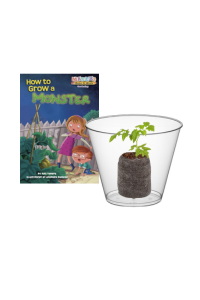
    Students read How to Grow a Monster, describe the needs of a zucchini plant, identify the structure and function of zucchini plant parts, grow classroom zucchini plants, and experiment with different environments and growing conditions. Kit includes a copy of the book, How to Grow a Monster, cups and seeds for a class set of 25 students. This kit does not need to be returned. Limit 1 per class.