This hands-on experiment demonstrates soil’s function as a water filter, as well as other physics concepts like hydrophobicity, soil absorption and adsorption, soil as a storage container for water, and the positive and negative charges of soil and contaminants.
Google Slide version of student worksheet available for elearning purposes.
In this lesson students explore weatherization (physical and chemical) by doing a series of short experiments that demonstrate how rocks and minerals are broken down into soil. Expand this lesson further by taking students on a field trip to look for rocks breaking down into soil.
This lesson investigates the miraculous process of air and water combining with seeds, soil and sunlight to create nearly all the food we eat. By having students observe different types of seeds, this lesson takes plant germination one step further by having students record the differing growth rates and other observations in germination journals (template provided).
This lesson is an interactive way to bring germination and the stages of plant development to life.
Students learn about the small fraction of the planet available for growing food and ways this precious area can be protected. This two-part lesson is an excellent way to introduce students to the importance of preserving soil and soil’s role in feeding 7+ billion people.
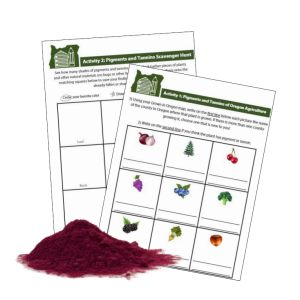
When we think of farmers in Oregon producing popular crops such as beets, blueberries, hazelnuts, onions, and grapes, we might not first think of art supplies. However, these food crops, along with many other plant materials, often find their way into the art studio! Many paints, drawing tools, and fabric dyes contain pigments and tannins, which come from agricultural commodities, even rock and soil! This lesson allows students to utilize foods and other plant materials to discover exciting, naturally occurring colors growing in their gardens or school yards.
Download Lesson Plan here: The Art of Food Plant Pigments and Tannins