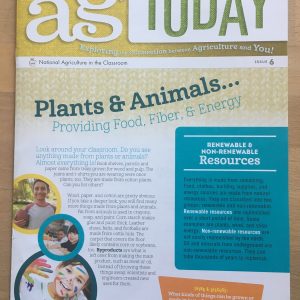
This six part series is a publication of National Agriculture in the Classroom. Issue six focuses on the importance and stewardship of natural resources in sustainably delivering high quality food, fiber, and energy while at the same time maintaining a high quality environment. Teacher guide is included.Check out the e-book version and the online teacher guide!
Please put the number of students in your class in the quantity section at checkout to ensure the correct number of supplies gets to you.Additional publications: Ag Today Issue 1, Ag Today Issue 2, Ag Today Issue 3, Ag Today Issue 4, Ag Today Issue 5This item does not need to be returned.
These free full color Oregon map documents feature the leading and unique commodities grown in the state’s seven regions. It is an excellent tool to bring the story of Oregon’s agricultural diversity to the classroom.The Grown in Oregon Map- Student Version helps students visualize where things are grown in our state and why. It is a great tool for teaching regions. It can be used to learn about counties, or for starting a discussion on nutrition and the abundance of healthy produce in our state.It is a two- sided document. Order a set for your classroom today. A printable 8.5″ x 11″ version is available as well download here.Please put the number of desired sheets in the quantity section at checkout to ensure the correct number of copies gets to you. These do not need to be returned.
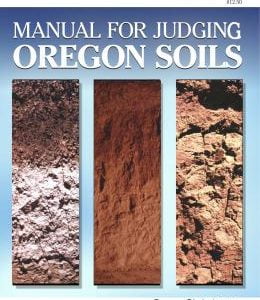
Covers soil basics such as soil formation, horizons, properties (including textural classes), profiles, site characteristics and evaluation, and the influences of soil characteristics on management decisions.This book needs to be returned.
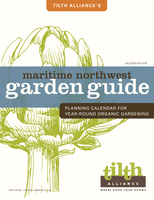
Revised in 2014, Tilth Alliance's month-by-month manual is tailored to the Pacific Northwest climate and a helpful resource for gardeners of all levels, beginning to expert. The 128-page guide outlines each month's garden tasks and lists hundreds of vegetable, herb and flower varieties to plant. It includes strategies for year-round gardening, articles about organic gardening techniques, resources, recipes and activities for kids.
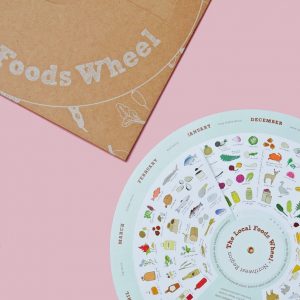
The Northwest wheel shows foods sourced from Oregon, Washington, and Idaho as well as from coastal waters. Some of the unique local foods available in the region include an abundance of wild and cultivated berries, unique seafood items like geoduck!The wheel is 12 inches in diameter printed on card stock in bright, full color by GreenerPrinter in Berkeley, CA. On the back of the wheel is an alphabetical seasonality reference that provides additional information about each of the foods depicted on the front.
This instructional unit has everything students need to learn about forests in Oregon. Included is a DVD, a fungi guide, sustainability and the global environment, a forest fact book, and fire in Oregon's forest. A great resource for teaching a natural resources or forestry lesson.
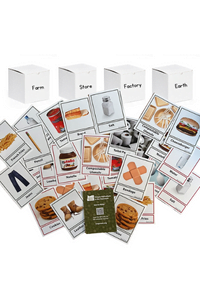
This fast-moving relay race teaches students that before any product leaves a factory, or enters a store, it began as a resource or product of the natural world – most likely agriculture. Students will work in teams and run a relay race where they have to quickly decide the source of a product and then race to place it into one of the buckets marked Factory, Store, Farm or Earth. Source Relay is a great interest approach activity for older students! Click here for the lesson plan. This kit does not need to be returned.
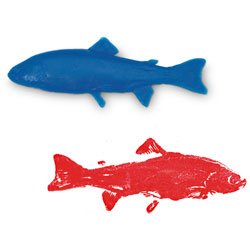
After studying fish and their lifecycles in Oregon's Interior Valleys (chapter 7) in the Get Oregonized text, rubber fish replicas allow students to create beautiful Gyotaku (fish prints).
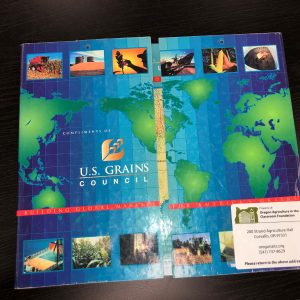
A visual kit that gives fun facts about grain, a map to show where grain is grown in the United States, and has grain variety samples included and labeled. Your students can view pictures, look at real samples, and learn more about the grain industry as a whole.
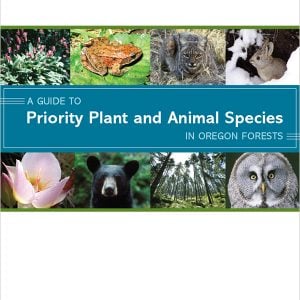
This revised and updated publication is designed to assist forest landowners, land managers, students, and educators in understanding how forests provide habitat for different wildlife and plant species. It describes the specific habitat requirements of selected species found in forested habitats across all ecoregions in Oregon. It provides teachers and students a way to learn more about wildlife species and the forest habitats they use and helps landowners and land managers determine what species to include in their management plans.
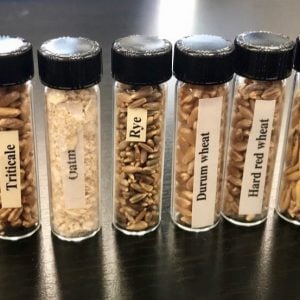
This set of 10 grain samples is a great resource for students to learn about different types of grain and what they look like after they've been processed. This set of samples includes: Soft White Wheat, Triticale, Rye, Durum Wheat, Hard Red Wheat, Oats, Barley, and processed samples of pasta, flour, and oatmeal.

 Does not need to be returned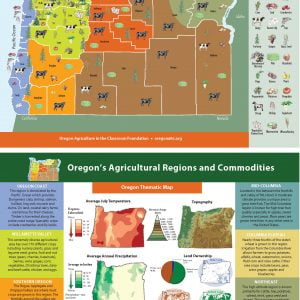
 Must be returned