Oregon Agriculture in the Classroom Logo

Featured Resources

Categories

Type

Grade Level

  • Garden to Table bookLogin to Hold

    Total Available: 4 (of )

    Must be returned

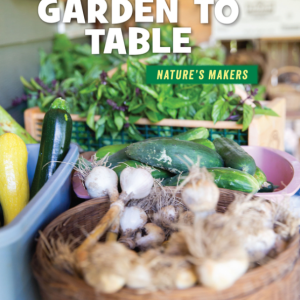
    Garden to Table

    Julie Knutson

    Follow farmer Tim Redmond of Skinny Farm of Scio as he takes produce from farm to table and discover all the ways small scale farmers contribute to what we eat--and how we live! Aligned to curriculum standards, these books also highlight key 21st Century content: Global Awareness, Financial Literacy, Health and Wellness, Civics Literacy, and Environmental Stewardship. Thought-provoking questions and hands-on activities encourage the development of critical life skills and social emotional growth. This book must be returned.
  • The Little Book of ChickensLogin to Hold

    Total Available: 2 (of )

    Does not need to be returned

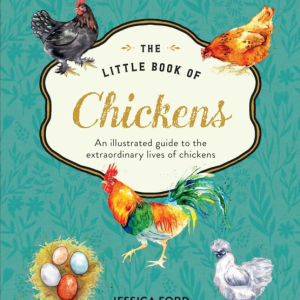
    The Little Book of Chickens

    Jessica Ford

    The Little Book of Chickens is a charming, informative book of all things chicken – learn about their life stages and how clever they really are, plus heaps of fun factoids and truly gorgeous breeds and their colourful eggs – all in a beautifully illustrated gift book. This book is appropriate for grades 6-12.This book must be returned.
  • The Little Book of BeesLogin to Hold

    Total Available: 2 (of )

    Must be returned

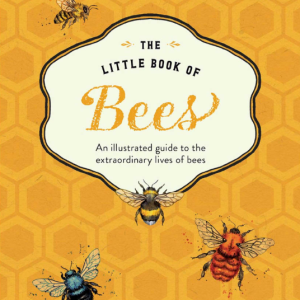
    The Little Book of Bees

    Hilary Kearney

    Bees first appeared on Earth 270 million years ago. Since the time of the dinosaurs, evolution has taken our beloved bees on an incredible journey—today, there are 20,000 species on the planet. The Little Book of Bees is a lovely, informative book of all things bee—from evolution and communication to honey, bee-keeping, and saving the bees—all in a beautifully illustrated gift book. This book is appropriate for grades 6-12.This book must be returned.
  • I Love StrawberriesLogin to Hold

    Total Available: 6 (of )

    Must be returned

    I Love Strawberries

    Shannon Anderson

    Jolie LOVES strawberries - and she’s on an unstoppable mission to grow her own food from seedling to table in this colorful introduction to the joy of growing the popular perennial. Through Jolie’s comical scrapbook-style journal entries, young readers will learn how she convinces the “old people” (aka her parents) to let her grow her own strawberries. Growing strawberries is a lot of work and responsibility, but Jolie is ready to find out just how delicious, rewarding, and sometimes complicated it can be to grow your own food.

    This book must be returned.See product webpage on Feeding Minds Press to access teaching resources and coloring pages: https://www.feedingmindspress.com/our-books/i-love-strawberries 
  • Water: Up, Down, and All AroundLogin to Hold

    Total Available: 2 (of )

    Must be returned

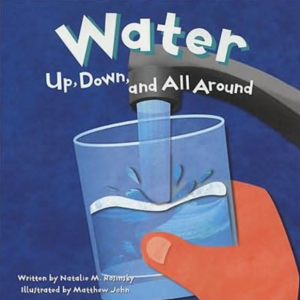
    Water: Up, Down, and All Around

    Natalie M. Rosinky

    Introduce young scientists to the basics of the water cycle! Through full-color photos and simple, easy-to-follow text, this nonfiction book introduces emergent readers to the importance of water, explaining evaporation and condensation, dew and frost, and the three states of water. Alongside charming illustrations, award-winning author Natalie M. Rosinsky delivers fun, fact-filled text for an engaging read-aloud or beginning read-alone.This book must be returned. 
  • Outdoor Farm, Indoor FarmLogin to Hold

    Total Available: 10 (of )

    Must be returned

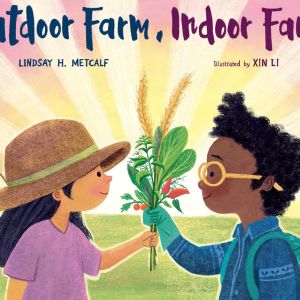
    Outdoor Farm, Indoor Farm

    Lindsay H. Metcalf

    Discover how both outdoor and indoor farms sustainably grow the food we eat throughout the year in this vibrant, rhyming picture book.Outdoor farm, tractors toil.Indoor farm, zero soil.With energetic, enchanting verse and sunshiny, colorful illustrations, discover how the food you eat is grown both outside—and inside! Join two children as they explore the inner workings of an outdoor farm and an indoor farm. You’ll see how a variety of amazing machinery like tractors and drones along with innovative farming techniques yield the wonderful food we all love to enjoy.This book must be returned.
  • Gardening with Less WaterLogin to Hold

    Total Available: 1 (of )

    Must be returned

    Gardening with Less Water

    David A. Bainbridge

    Gardening with Less Water offers simple, inexpensive, low-tech techniques for watering your garden much more efficiently — using up to 90 percent less water for the same results. With illustrated step-by-step instructions, David Bainbridge shows you how to install buried clay pots and pipes, wicking systems, and other porous containers that deliver water directly to a plant’s roots with little to no evaporation. These systems are available at hardware stores and garden centers; are easy to set up and use; and work for garden beds, container gardens, and trees.This book would be an excellent resource for 6th-12th grade educators looking to provide water conservation engineering challenges for their students.This book must be returned.
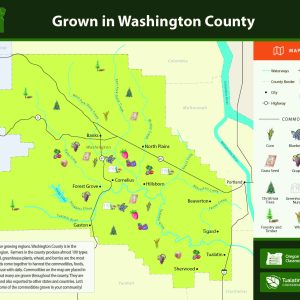
  • Grown in Washington County Map

    This beautiful 8.5 x 11 inch full color map of Washington County features unique commodities grown in the county. It is an excellent tool to bring a piece of the story one County plays in Oregon’s agricultural diversity to the classroom.The Grown in Washington County Map helps students visualize where things are grown right in their backyard. On the back of the map student's can learn some more information about the unique commodities grown in the County and how they support the diversity of Oregon agriculture.Maps are free to Oregon teachers. If you would like a classroom set please let us know how many to send!
  • SeedLogin to Hold

    Total Available: 5 (of 12)

    Must be returned

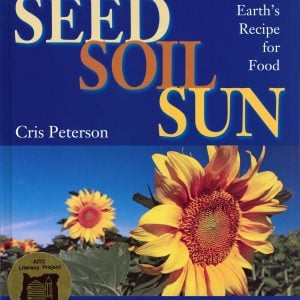
    Seed, Soil, Sun

    Cris Peterson

    Seed. Soil. Sun. With these simple ingredients, nature creates our food. This beautifully written book by Cris Peterson, brings both wonder and clarity to the subject of agriculture, celebrating the cycle of growth, harvest, and renewal. The photography that conveys this story is a perfect fit for this story. The companion book to the Seed, Soil, Sun lesson plan and the Seed, Soil, Sun Kit. Please check the kit out separately.
  • Chinook Rubber Fish ReplicasLogin to Hold

    Total Available: 2 (of 4)

    Must be returned

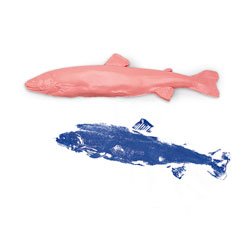
    Chinook Rubber Fish Replicas

    Get Oregonized

    After studying fish and their lifecycles in Oregon's Interior Valleys (chapter 7) in the Get Oregonized text, rubber fish replicas allow students to create beautiful Gyotaku (fish prints). These rubber fish replicas are of chinook salmon, perfect for after a lesson on the state fish!We currently have 2 fish available in our Washington County office.Please reach out to our current Washington County Programs Coordinator to check out this item, or to have them lead the activity in your classroom! 
  • Achoo! Why Pollen CountsLogin to Hold

    Total Available: 1 (of 2)

    Must be returned

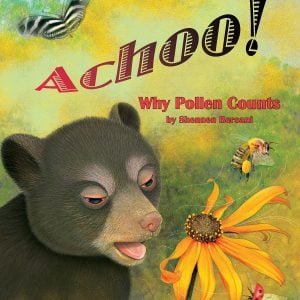
    Achoo! Why Pollen Counts

    Shennen Bersani

    Spring has arrived and pollen is in the air. Baby Bear does not like the pollen-it sticks to his fur and makes him itchy and sneezy. He’s allergic! Achoo! He just wishes the pollen were gone. When his friends gather to tell him why they need pollen, Baby Bear learns that pollen is good for the forest and provides food for many animals, including him! Pollen might be something we all love to hate, but can we really live without it? This story explains why we need it. This title is also available in Spanish.
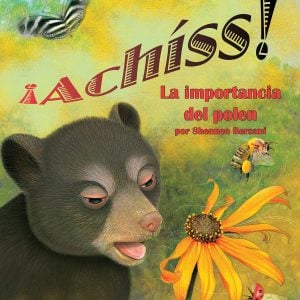
  • Achiss! La Importancia de PolenLogin to Hold

    Total Available: 2 (of 2)

    Must be returned

    Achiss! La Importancia de Polen

    Shennen Bersani

    La primavera ha llegado y el polen se siente en el aire. Al bebé Oso no le gusta el polen - se le pega en su pelaje y lo hace tener comezón y estornudar. ¡Él es alérgico! ¡Achís! Desearía que el polen no existiera. Cuando sus amigos se reúnen para decirle por qué nececitan el polen, el bebé Oso aprende que el polen es bueno para el bosque y que provee alimento para muchos animales, ¡que lo incluyen a él! El polen puede ser algo que todos odiemos pero, ¿realmente podemos sobrevivir sin él? Esta historia explica por qué lo necesitamos.
  • What's in the Garden?Login to Hold

    Total Available: 1 (of 1)

    Must be returned

    What’s in the Garden?

    Marianne Berkes

    Good food doesn't begin on a store shelf with a box. It comes from a garden bursting with life, color, sounds, smells, sunshine, moisture, birds, and bees! Healthy food becomes much more interesting when children know where they come from. So what's in the garden? Kids will find a variety fruits and vegetables, and a tasty, kid-friendly recipe for each one to start a lifetime of good eating. A food for thought section presents interesting facts about each fruit and vegetable, and a how does your garden grow? section explains facts about gardening and the parts of plants.
  • Aquaponics KitLogin to Hold

    Total Available: 1 (of 8)

    Must be returned

    Aquaponics Kit

    Raise fish and grow salad greens in your classroom! This kit guides students through an investigation of what plants and animals need in order to survive, nutrient cycling, and how organisms interact in an ecosystem. This kit includes clear tubs, an overflow drain kit, submersible fountain pump, flexible tubing, clay pellets, a glow light, a timer, a water test kit, ammonium chloride, a thermometer, seeds, fish food, a fish net, an aquarium cave, and a construction and maintenance guide. Fish and water must be provided by the educator. Explore the companion lesson here.This item is loaned out on a yearly basis, and must be returned in June at the end of the academic year. This item is too large to be mailed and must be picked up from the Washington County office in Hillsboro.
  • Bon Appetit: The Delicious Life of Julia ChildLogin to Hold

    Total Available: 2 (of 2)

    Must be returned

    Bon Appetit: The Delicious Life of Julia Child

    Jessie Hartland

    Follow Julia Child—chef, author, and television personality—from her childhood in Pasadena, California, to her life as a spy in WWII, to the cooking classes she took in Paris, to the publication of Mastering the Art of French Cooking, to the funny moments of being a chef on TV. Use this book to teach about the diversity of careers available in the food system!
  • ChoiceLogin to Hold

    Total Available: 3 (of 3)

    Must be returned

    Choice, Control, and Change

    Pamela A. Koch

    Middle school students learn science through studying diet and activity choices. They learn about how the human body works, and how food and activity play a role in its well-being. Students engage in hands-on investigations of food preference, our food environment, energy intake and expenditure, lifestyle-related diseases, and more. Finally, they explore and analyze their personal food choices through scientific reasoning and apply what they have learned to personal decisions related to their diet, physical activity, and overall health.