Oregon Agriculture in the Classroom Logo

Featured Resources

Categories

Type

Grade Level

  • A Weed is a FlowerLogin to Hold

    Total Available: 1 (of 2)

    Must be returned

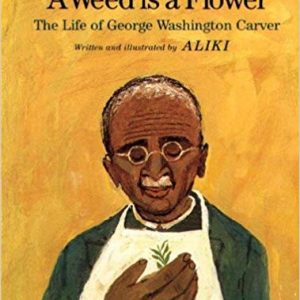
    A Weed is a Flower

    ALIKI

    George Washington Carver often said that a weed is a flower growing in the wrong place. He might have said this about himself. As the child of slaves, he grew up eager to learn, but was unable to find a school in his neighborhood that would accept black students. It was twenty years before he had enough money saved to go to college, but eventually George Washington Carver became a professor at the Tuskegee Institute in Alabama. There he was able to teach poor farmers the value of plants such as the sweet potato and the peanut - crops that were almost unknown at the time, but for which he invented hundreds of uses.Written and illustrated with affection for "a wonderful man who devoted his whole life to making life better for others," Aliki's biography tells the remarkable story of a great figure in African American history who is now recognized as the most prominent Black scientist of the early twentieth century. This book needs to be returned. 
  • Bon Appetit: The Delicious Life of Julia ChildLogin to Hold

    Total Available: 2 (of 2)

    Must be returned

    Bon Appetit: The Delicious Life of Julia Child

    Jessie Hartland

    Follow Julia Child—chef, author, and television personality—from her childhood in Pasadena, California, to her life as a spy in WWII, to the cooking classes she took in Paris, to the publication of Mastering the Art of French Cooking, to the funny moments of being a chef on TV. Use this book to teach about the diversity of careers available in the food system!
  • Corn is Maize: The Gift of the IndiansLogin to Hold

    Total Available: 5 (of 2)

    Must be returned

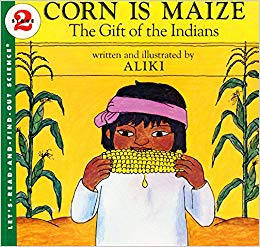
    Corn is Maize: The Gift of the Indians

    Aliki

    This is the story of maize and the Native American farmers who found and nourished it from a wild grass plant into the corn we know today. Clear accurate illustrations accompany text on each page.
  • Voices from the Field: Children of Migrant Farmworkers Tell Their StoriesLogin to Hold

    Total Available: 2 (of 2)

    Must be returned

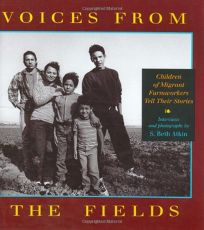
    Voices from the Field: Children of Migrant Farmworkers Tell Their Stories

    S. Beth Akin

    This critically acclaimed book features photographs, poems, and interviews with nine children who reveal the hardships and hopes of today's Mexican-American migrant farm workers and their families.
  • Wangari Maathai: The Woman who Planted Millions of TreesLogin to Hold

    Total Available: 2 (of 2)

    Must be returned

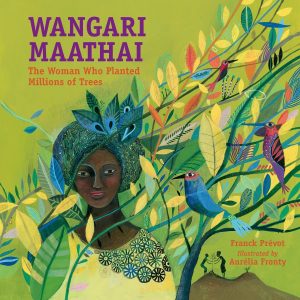
    Wangari Maathai: The Woman who Planted Millions of Trees

    Franck Prevot

    Wangari Maathai received the Nobel Peace Prize in 2004 for her efforts to lead women in a nonviolent struggle to bring peace and democracy to Africa through its reforestation. Her organization planted over thirty million trees in thirty years. This beautiful picture book tells the story of an amazing woman and an inspiring idea.
  • Who Was Cesar Chavez?Login to Hold

    Total Available: 2 (of 2)

    Must be returned

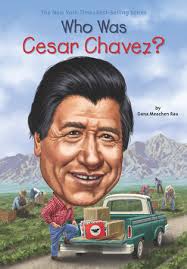
    Who Was Cesar Chavez?

    Dana Meachen Rau

    When he was young, Cesar and his Mexican American family toiled in the fields as migrant farm workers. He knew all too well the hardships farm workers faced. His public-relations approach to unionism and aggressive but nonviolent tactics made the farm workers' struggle a moral cause with nationwide support. Along with Dolores Huerta, he cofounded the National Farmworkers Association. His dedication to his work earned him numerous friends and supporters, including Robert Kennedy and Jesse Jackson.
  • Diana's White House GardenLogin to Hold

    Total Available: 2 (of 2)

    Must be returned

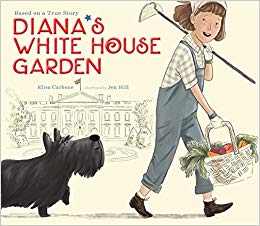
    Diana’s White House Garden

    Elisa Carbone

    Diana Hopkins lived in a white house. THE White House. World War II is in full force across the seas. It's 1943, President Roosevelt is in office, and Diana's father, Harry Hopkins, is his chief advisor. And Diana wants to be part of the war effort. After some well-intentioned missteps (her quarantine sign on her father's office door was not well-received), the President requests her help with his newest plan for the country's survival: Victory Gardens!
  • Doing Her Bit: A Story about the Woman's Land Army of AmericaLogin to Hold

    Total Available: 2 (of 2)

    Must be returned

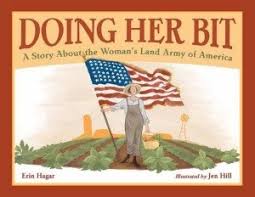
    Doing Her Bit: A Story about the Woman’s Land Army of America

    Erin Hagar

    Based on true events, this fictional story traces the history of the Women’s Land Army during World War I. Real-life “Farmerette” Helen Stevens trains to farm the land, negotiates a position for herself and other women, and does her bit for the war effort. This unique book celebrates the true grit of U.S. American women.
  • Dolores Huerta: A Hero to Migrant WorkersLogin to Hold

    Total Available: 2 (of 2)

    Must be returned

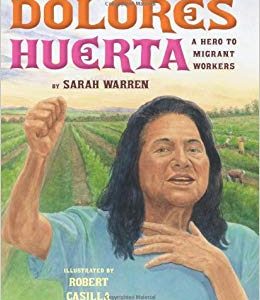
    Dolores Huerta: A Hero to Migrant Workers

    Sarah Warren

    Dolores is a teacher, a mother, and a friend. She wants to know why her students are too hungry to listen, why they don't have shoes to wear to school. Dolores is a warrior, an organizer, and a peacemaker. When she finds out that the farm workers in her community are poorly paid and working under dangerous conditions, she stands up for their rights.
  • Erosion: How Hugh Bennett Saved America’s Soil and Ended the Dust BowlLogin to Hold

    Total Available: 2 (of 2)

    Must be returned

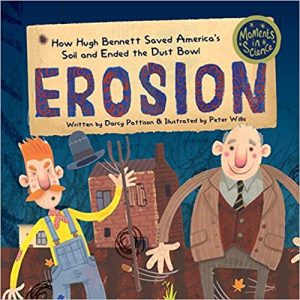
    Erosion: How Hugh Bennett Saved America’s Soil and Ended the Dust Bowl

    Darcy Pattison

    When the dust storms of the 1930s threatened to destroy U.S. farming and agriculture, Hugh Bennett knew what to do. For decades, he had studied the soils in every state, creating maps showing soil composition nationwide. He knew what should be grown in each area, and how to manage the land to conserve the soil. He knew what to do for weathering and erosion.To do that, he needed the government’s help. But how do you convince politicians that the soil needs help?Hugh Bennett knew what to do. He waited for the wind.This is the exciting story of a soil scientist confronting politicians to encourage them to pass a law to protect the land, the soil. When the U.S. Congress passed a law establishing the Soil Conservation Service, it was the first government agency in the world dedicated to protecting the land, to protecting the Earth.
  • Full of BeansLogin to Hold

    Total Available: 3 (of 3)

    Must be returned

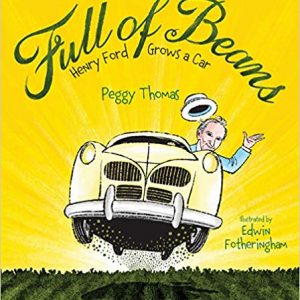
    Full of Beans, Henry Ford Grows a Car

    Peggy Thomas

    With a mind for ingenuity, Henry Ford looked to improve life for others. After the Great Depression struck, Ford especially wanted to support ailing farmers. For two years, Ford and his team researched ways to use farmers' crops in his Ford Motor Company. They discovered that the soybean was the perfect answer. Soon, Ford's cars contained many soybean plastic parts, and Ford incorporated soybeans into every part of his life. He ate soybeans, he wore clothes made of soybean fabric, and he wanted to drive soybeans, too. Award-winning author Peggy Thomas and illustrator Edwin Fotheringham explore this American icon's little-known quest. This book needs to be returned. 
  • Hungry Planet- What the World EatsLogin to Hold

    Total Available: 1 (of 2)

    Must be returned

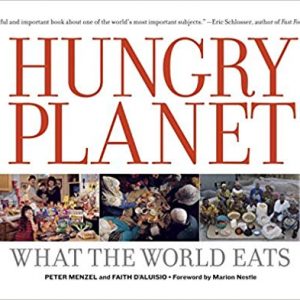
    Hungry Planet- What the World Eats

    Peter Menzel

    The age-old practice of sitting down to a family meal is undergoing unprecedented change as rising world affluence and trade, along with the spread of global food conglomerates, transform eating habits worldwide. HUNGRY PLANET profiles 30 families from around the world--including Bosnia, Chad, Egypt, Greenland, Japan, the United States, and France--and offers detailed descriptions of weekly food purchases; photographs of the families at home, at market, and in their communities; and a portrait of each family surrounded by a week's worth of groceries. Featuring photo-essays on international street food, meat markets, fast food, and cookery, this captivating chronicle offers a riveting look at what the world really eats. This book needs to be returned. 

  • In the Garden with Dr. CarverLogin to Hold

    Total Available: 2 (of 2)

    Must be returned

    In the Garden with Dr. Carver

    Susan Grigsby

    Sally is a young girl living in rural Alabama in the early 1900s, a time when people were struggling to grow food in soil that had been depleted by years of cotton production. One day, Dr. George Washington Carver shows up to help the grownups with their farms and the children with their school garden.
  • Ag Today - Issue 4Login to Hold

    Total Available: 74 (of 400)

    Does not need to be returned

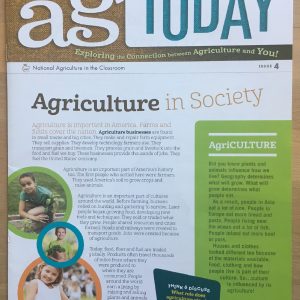
    Ag Today – Issue 4

    National Agriculture in the Classroom

    This six part series is a publication of National Agriculture in the Classroom. Issue four looks at how the global movement of agriculture products continue to be driven by economics, and consumer demand and preferences. Agriculture, food, and natural resource systems continue to play an integral role in the evolution of societies both in the United States and the world. Teacher guide is included.Check out the e-book version and online teacher guide! Please put the number of students in your class in the quantity section at checkout to ensure the correct number of supplies gets to you.Additional publications: Ag Today Issue 1, Ag Today Issue 2Ag Today Issue 3, Ag Today Issue 5, Ag Today Issue 6This item doe not need to be returned.
  • Who was Laura Ingalls Wilder?Login to Hold

    Total Available: 2 (of 2)

    Must be returned

    Who was Laura Ingalls Wilder?

    Patricia Brennan Demuth

    Laura Ingalls Wilder's Little House books, based on her own childhood and later life, are still beloved classics almost a century after she began writing them. Now young readers will see just how similar Laura's true-life story was to her books. Born in 1867 in the "Big Woods" in Wisconsin, Laura experienced both the hardship and the adventure of living on the frontier. Her life and times are captured in engaging text and 80 black-and-white illustrations.
  • John DeereLogin to Hold

    Total Available: 7 (of 7)

    Must be returned

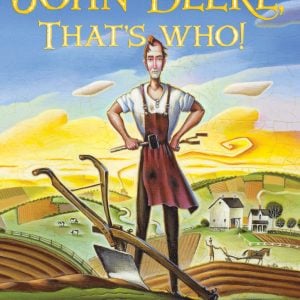
    John Deere, That’s Who!

    Tracy Nelson Maurer

    Back in the 1830s, John Deere was a young blacksmith from Vermont, about to make his mark on American history. He moved to Illinois, where farmers were struggling to plow through the thick, rich soil they called gumbo. Hee tinkered and tweaked and tested until he invented a steel plow that sliced into the prairie easy as you please. Long before the first tractor, John Deere changed farming forever. This book will need to be returned.