Oregon Agriculture in the Classroom Logo

Featured Resources

Categories

Type

Grade Level

  • A Tart Cherry on Top KitLogin to Hold

    Out of Stock. Backorder Available.

    Does not need to be returned

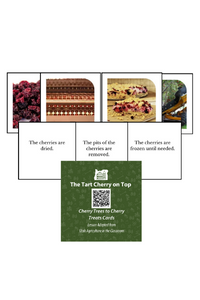
    A Tart Cherry on Top Kit

    Students explore tart cherry production in the United States and explain why producers and consumers are needed in the cherry industry. Kit includes 15 sets of the Cherry Trees to Cherry Treats cards. This kit does not need to be returned. Link to Cherry Trees to Cherry Treats handout - https://cdn.agclassroom.org/media/uploads/ip670/The_cherries_are_delivered_to_a_processing_plant._(1)[100].pdf
  • PlaceholderLogin to Hold

    Out of Stock. Backorder Available.

    Must be returned

    Plant Life

    Peter Riley

    This series is an introduction to the key science subjects, explaining the main scientific principles and showing how they work. Plant Life details the variety of plants in the world and how they grow and fertilize.' This book must be returned
  • 1Login to Hold

    Out of Stock. Backorder Available.

    Must be returned

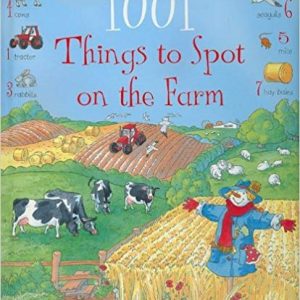
    1,001 things to Spot on the Farm

    Gillian Doherty

    Invites young readers to find various quantities of such things as farm animals and tools which are labeled in the illustrations of rural scenes, including a sheep farm, an orchard, a rice paddy, and bee hives. This book needs to be returned. 
  • The Art of Food: Plant Pigments and TanninsLogin to Hold

    Out of Stock. Backorder Available.

    Does not need to be returned

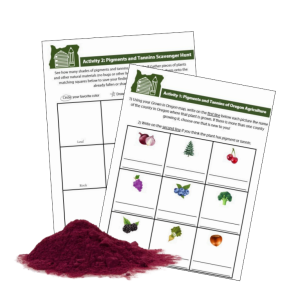
    The Art of Food: Plant Pigments and Tannins

    When we think of farmers in Oregon producing popular crops such as beets, blueberries, hazelnuts, onions, and grapes, we might not first think of art supplies. However, these food crops, along with many other plant materials, often find their way into the art studio! Many paints, drawing tools, and fabric dyes contain pigments and tannins, which come from agricultural commodities, even rock and soil! This lesson allows students to utilize foods and other plant materials to discover exciting, naturally occurring colors growing in their gardens or school yards.

    Download Lesson Plan here: The Art of Food Plant Pigments and Tannins
  • PlaceholderLogin to Hold

    Out of Stock. Backorder Available.

    Must be returned

    Honeybee The Busy Life of Apis Mellifera

    Candace Fleming,Eric Rohmann

    A tiny honeybee emerges through the wax cap of her cell. Driven to protect and take care of her hive, she cleans the nursery and feeds the larvae and the queen. But is she strong enough to fly? Not yet! Apis builds wax comb to store honey, and transfers pollen from other bees into the storage. She defends the hive from invaders. And finally, she begins her new life as an adventurer. The confining walls of the hive fall away as Apis takes to the air, finally free, in a brilliant double-gatefold illustration where the clear blue sky is full of promise-- and the wings of dozens of honeybees, heading out in search of nectar to bring back to the hive. Eric Rohmann's exquisitely detailed illustrations bring the great outdoors into your hands in this poetically written tribute to the hardworking honeybee. Award-winning author Candace Fleming describes the life cycle of the honeybee in accessible, beautiful language. Similar in form and concept to the Sibert and Orbis Pictus award book Giant Squid, Honeybee also features a stunning gatefold and an essay on the plight of honeybees. This book needs to be returned.
  • PlaceholderLogin to Hold

    Out of Stock. Backorder Available.

    Does not need to be returned

    My Farm Web Kit – Homeschool

    HOMESCHOOL ONLY: Students use the visual representation of a web to explore the role of agriculture in their daily lives and understand how most of the necessities of life can be traced back to the farm. This kit includes: six student kits with cards and string. This kit does not need to be returned. 
  • My Farm Web Kit - HomeschoolLogin to Hold

    Out of Stock. Backorder Available.

    Does not need to be returned

    Right this Very Minute – Farm Web Kit

    Students use the visual representation of a web to explore the role of agriculture in their daily lives and understand how most of the necessities of life can be traced back to the farm. This kit includes: six student kits with cards and string. This kit does not need to be returned. 
  • trillions of treesLogin to Hold

    Out of Stock. Backorder Available.

    Must be returned

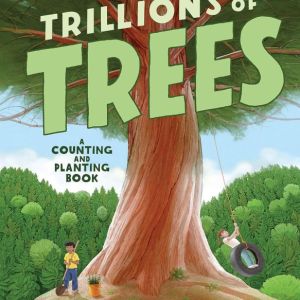
    Trillions of Trees

    Kurt Cyrus

    Kurt Cyrus's Trillions of Trees is an ecological picture book companion to the popular Billions of Bricks, about counting and planting trees. Grab a shovel and get ready to plant some trees! From poplars to pines, alder, apple, peach, and plum, this rhyming story introduces the concept of orders of magnitude and celebrates the importance of planting different trees and preserving diverse ecosystems. Nurturing a new sapling is one of the first steps in growing hundreds, millions, even trillions of trees. This book needs to be returned.
  • PlaceholderLogin to Hold

    Out of Stock. Backorder Available.

    Must be returned

    The Boy Who Harnessed the Wind

    William Kamkwamba, Bryan Mealer

    When fourteen-year-old William Kamkwamba's Malawi village was hit by a drought, everyone's crops began to fail. Without enough money for food, let alone school, William spent his days in the library . . . and figured out how to bring electricity to his village. Persevering against the odds, William built a functioning windmill out of junkyard scraps, and thus became the local hero who harnessed the wind. Lyrically told and gloriously illustrated, this story will inspire many as it shows how - even in the worst of times - a great idea and a lot of hard work can still rock the world. This book needs to be returned.
  • Maxine and the Greatest Garden Ever!Login to Hold

    Out of Stock. Backorder Available.

    Must be returned

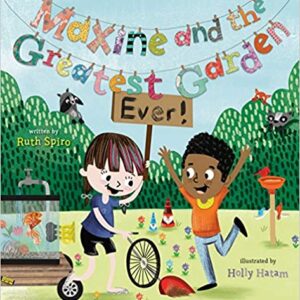
    Maxine and the Greatest Garden Ever!

    Ruth Spiro

    Maxine and her friend Leo are makers. Maxine's style is functional. Leo's style is artistic. Together, They're determined to make one spectacular garden, including a pond for Maxine's fabulous goldfish Milton! But their garden attracts all sorts of visitors, with rabbits and squirrels and raccoons feasting on their veggies. Now Maxine and Leo must work together to try (and try and try again) to find a way to save their garden.   Perfect for STEM and maker spaces, this book is sure to inspire creative thinkers and tinkerers everywhere!   This book needs to be returned.
  • A Pocketful of GoobersLogin to Hold

    Out of Stock. Backorder Available.

    Must be returned

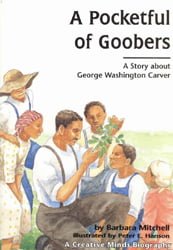
    A Pocketful of Goobers

    Barbara Mitchell

    This book relates the scientific efforts of George Washington Carver, especially his production of more than 300 uses for the peanut. This book needs to be returned. 
  • A Weed is a FlowerLogin to Hold

    Out of Stock. Backorder Available.

    Must be returned

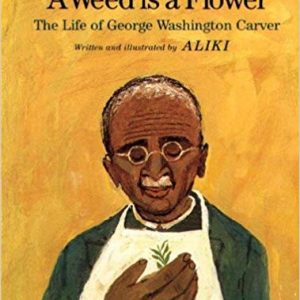
    A Weed is a Flower

    ALIKI

    George Washington Carver often said that a weed is a flower growing in the wrong place. He might have said this about himself. As the child of slaves, he grew up eager to learn, but was unable to find a school in his neighborhood that would accept black students. It was twenty years before he had enough money saved to go to college, but eventually George Washington Carver became a professor at the Tuskegee Institute in Alabama. There he was able to teach poor farmers the value of plants such as the sweet potato and the peanut - crops that were almost unknown at the time, but for which he invented hundreds of uses. Written and illustrated with affection for "a wonderful man who devoted his whole life to making life better for others," Aliki's biography tells the remarkable story of a great figure in African American history who is now recognized as the most prominent Black scientist of the early twentieth century. This book needs to be returned. 
  • Where Does Food Come From?Login to Hold

    Out of Stock. Backorder Available.

    Must be returned

    Where Does Food Come From?

    Shelley Rotner, Gary Goss

    The supermarket is the place where you buy your food, but have you ever wondered where you favorite foods really come from? A lot of food comes from plants or from animals. but it might surprise you to know that some of the food you eat comes from bees or from seawater. Where does you favorite food come from? Find out in the fun, colorful, easy to read book! This book needs to be returned. 
  • Monocots and DicotsLogin to Hold

    Out of Stock. Backorder Available.

    Does not need to be returned

    Monocots and Dicots

    Oregon Agriculture in the Classroom

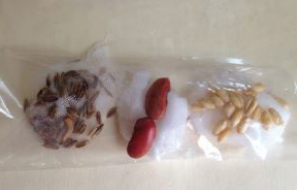
    In this lesson students set up a side-by-side germination experiment of monocot and dicot seeds. They will observe differences and similarities of these two types of flowering plants at the germination level, specifically the number of cotyledons. Students can record their findings daily. This is a great way to begin a flowering plant unit. This kit does not need to be returned. This Kit Includes: Grass seed, wheat seeds, bean seeds, zip lock bags, cotton balls, and a paper lesson plan Please put the number of students in your class in the quantity section at checkout to ensure the correct number of supplies gets to you.
  • PlaceholderLogin to Hold

    Out of Stock. Backorder Available.

    Does not need to be returned

    Grow a Bean in a Bag Kit

    Grow a bean in a bag using water beads! Each water bead is colored and represents the needs of plant for growth and development. This kit does not need to be returned.  This Kit Includes: Water beads, jewelry bags, beans, and a paper lesson plan Please put the number of students in your class in the quantity section at checkout to ensure the correct number of supplies gets to you.
  • Agricultural DronesLogin to Hold

    Out of Stock. Backorder Available.

    Must be returned

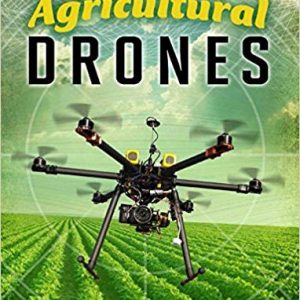
    Agricultural Drones

    Simon Rose

    Farm fields can span hundreds of acres. With so much area to cover, checking crops and livestock can be difficult. But with an agricultural drone, this job becomes much simpler. Young readers will discover how drones help farmers maximize efficiencies and bring abundant harvests. This book needs to be returned.Â