Marisa gets to help make dumplings this year to celebrate the New Year. But she worries if anyone will eat her funny-looking dumplings. Set in the Hawaiian islands, this story celebrates the joyful mix of food, customs, and languages from many cultures.
This book is about Walter the town baker who accidentally angers the Duke. In order to make amends, he is tasked with inventing a roll through which the morning sun can shine through three times. This book needs to be returned.
This book is about eggs changing form. Mixing, cooking, and adding salt and pepper are all part of making scrambled eggs. This book will need to be returned.
This book explains the many different uses of eggs. Students learn what nutrients they get from this food, and why it is important to eat a balanced diet. Part of the What’s for Lunch series. This book needs to be returned.
Amelia Luisa Martinez odia los caminos. Los caminos llevan su familia migrante al campo donde ellos trabajan todo el día, a las escuelas donde nadie conoce su nombre, y a cabañas desoladas que no están en casa. Amelia anhela una casa bella y blanca con un gran árbol de sombra, donde ella puede vivir sin preocuparse por los caminos. Un día, Amelia descubre un “camino fortuito”. Al final ella encuentra un árbol viejo y asombroso que parece el arbol de sus sueños. El majestuoso sentido de permanencia del árbol la inspira a crear sus propios raíces especiales.
George Levenson, Shmuel Thaler, Alberto Jimenez Rioja
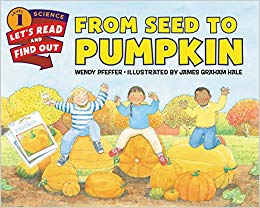
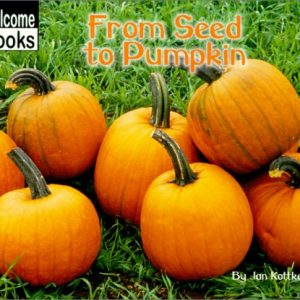
This treat of a picture book comes cloaked in the colors of fall. Bouncy verses and glowing photographs show a backyard pumpkin patch move through its natural cycle; seeds sprouting, flowers blooming, bees buzzing, pumpkins growing . . .and then going back to earth. Also includes an author's note explaining how to grow your own pumpkin! This book is available in English under Pumpkin Circle. This book will need to be returned.
When the dust storms of the 1930s threatened to destroy U.S. farming and agriculture, Hugh Bennett knew what to do. For decades, he had studied the soils in every state, creating maps showing soil composition nationwide. He knew what should be grown in each area, and how to manage the land to conserve the soil. He knew what to do for weathering and erosion.To do that, he needed the government’s help. But how do you convince politicians that the soil needs help?Hugh Bennett knew what to do. He waited for the wind.This is the exciting story of a soil scientist confronting politicians to encourage them to pass a law to protect the land, the soil. When the U.S. Congress passed a law establishing the Soil Conservation Service, it was the first government agency in the world dedicated to protecting the land, to protecting the Earth.
The day-to-day business of growing and harvesting crops for food is brought to dramatic life in this Nebraska Children's Agriculture Book of the Year as children see farmers and their machinery hard at work. Farmers lifted and hauled, cut and chopped, plowed and planted, watered and mowed by hand or with horses and simple equipment--until the first tractor appeared. Now there are tractors with eight wheels and tires big enough to stand in, skid steers with buckets for lifting, and sprayers that look like huge prehistoric birds, as well as many other modern computerized farming machines. Here's a look at farm machinery in the modern age.
Will Allen is no ordinary farmer. A former basketball star, he's as tall as his truck, and he can hold a cabbage--or a basketball--in one hand. But what is most special about Farmer Will is that he can see what others can't see. When he looked at an abandoned city lot in Milwaukee he saw a huge table, big enough to feed the whole world.
Thomas Jefferson loved to garden. In the spring, he and his neighbors competed to see whose peas would be ready to eat first. Two hundred years later, Maya's class is having its own First Peas to the Table garden contest. Will a secret tip from Thomas Jefferson help Maya win? This book needs to be returned.
Part of the America at Work series, Fishing explains how fish farmers in Maine raise salmon and halibut, and traces the fascinating life journey of a wild salmon in Alaska. Combining fact and fiction with colorful illustrations, this book delivers an early lesson in appreciating and protecting our natural resources. Fishing introduces young children to the people, machines and environmental concerns involved in some of America's leading resource-based industries. This book needs to be returned.
A girl and her father buy plants, potting soil, and a window box at the supermarket, ride the bus to their apartment, and put together a colorful gift for the child’s mother. Rhyming verse carries the brief story, while wonderful, warm, full-color illustrations present scenes from novel angles, and depict a loving family with a sense of intimacy, sincerity, and joy.
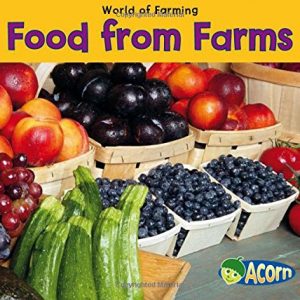
This book uses colorful photos and simple, leveled text to introduce children to the food produced from farms around the world. This book needs to be returned.
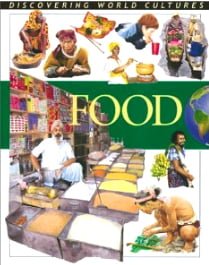
Our lifestyles often influence what and how we eat. This fascinating book examines how food is grown, prepared and appreciated by different cultures around the world. Children will be interested to learn why certain foods are more popular in certain parts of the world and why we eat the foods we do. This book will need to be returned.