Oregon Agriculture in the Classroom Logo

Featured Resources

Categories

Type

Grade Level

  • OAITC grain millLogin to Hold

    Total Available: 2 (of )

    Must be returned

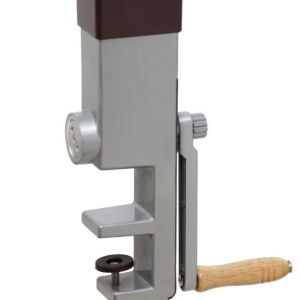
    Grain Mill

    From grain to flour in your hands! Help students explore where bread, pastries, noodles, tortillas, and other grain-based foods begin by grinding grains right in your classroom. This hands-on grain mill connects agriculture to everyday food while encouraging curiosity about the process of growing, harvesting, and preparing grain. Students will see, touch, and process grains as they turn the hand-cranked grain mill to transform grain into a food-prep ready state.Includes instructions and all 7 parts (please check to ensure you have included all parts when returning mill). Clamps easily to desk or table.Recommended grains for grinding:
    • Wheat varieties: Hard and soft wheat, spelt, einkorn, kamut, and emmer.
    • Common grains: Rye, barley, brown and white rice, and oat groats.
    • Pseudograins & millets: Quinoa, buckwheat, millet, amaranth, and teff.
    • Legumes & corn: Dried corn, lentils, chickpeas, and black beans.
    NOT recommended due to oils or structure which may damage mill or result in difficult to clean messes:
    • Oily seeds: Flax seeds, chia seeds, and sesame seeds.
    • Nuts and coffee: Peanuts, almonds, coffee beans, and spices.
    • Wet or sticky items: High-moisture or fresh-picked field corn.
    How to use video: Grain Mill - VKP1012 - YouTubeIf you like this product and would like to purchase a grain mill kit for your classroom, we recommend checking out National Agriculture in the Classroom: Grain Mill - AgClassroomStore at USU3-week checkout. This item must be returned to the Washington County OAITC office.  
  • Garden to Table bookLogin to Hold

    Total Available: 4 (of )

    Must be returned

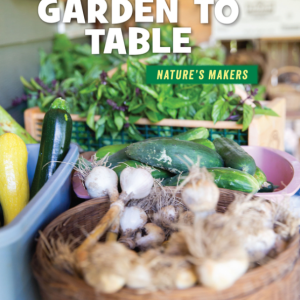
    Garden to Table

    Julie Knutson

    Follow farmer Tim Redmond of Skinny Farm of Scio as he takes produce from farm to table and discover all the ways small scale farmers contribute to what we eat--and how we live! Aligned to curriculum standards, these books also highlight key 21st Century content: Global Awareness, Financial Literacy, Health and Wellness, Civics Literacy, and Environmental Stewardship. Thought-provoking questions and hands-on activities encourage the development of critical life skills and social emotional growth. This book must be returned.
  • The Little Book of ChickensLogin to Hold

    Total Available: 2 (of )

    Does not need to be returned

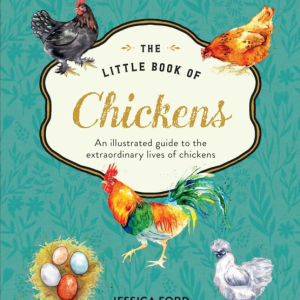
    The Little Book of Chickens

    Jessica Ford

    The Little Book of Chickens is a charming, informative book of all things chicken – learn about their life stages and how clever they really are, plus heaps of fun factoids and truly gorgeous breeds and their colourful eggs – all in a beautifully illustrated gift book. This book is appropriate for grades 6-12.This book must be returned.
  • The Little Book of BeesLogin to Hold

    Total Available: 2 (of )

    Must be returned

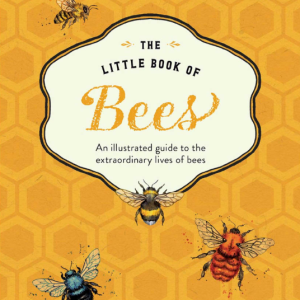
    The Little Book of Bees

    Hilary Kearney

    Bees first appeared on Earth 270 million years ago. Since the time of the dinosaurs, evolution has taken our beloved bees on an incredible journey—today, there are 20,000 species on the planet. The Little Book of Bees is a lovely, informative book of all things bee—from evolution and communication to honey, bee-keeping, and saving the bees—all in a beautifully illustrated gift book. This book is appropriate for grades 6-12.This book must be returned.
  • Beef By-Products Source RelayLogin to Hold

    Total Available: 40 (of )

    Does not need to be returned

    Beef By-Products Source Relay

    Many students think products simply come from factories or stores. This hands-on activity helps students understand that before an item ever leaves a factory or enters a store, it begins as a resource or product in the natural world. More specifically, these products can all be traced back to one unassuming animal, the cow! In the Beef By-Product Source Relay, students will work in teams and run a relay race where they will quickly decide the source of a product and then race to place it into one of the buckets marked Factory, Farm, Store, Earth, or Cow.
  • Science in Your Shopping CartLogin to Hold

    Total Available: 27 (of )

    Does not need to be returned

    Science in Your Shopping Cart

    Science in Your Shopping Cart shows us just how much science is behind the everyday items we use, eat, and wear. In the United States, we pay less for food than almost any other country. Every year, researchers introduce dozens of new and improved varieties of fruits, vegetables, and other products. But as we walk through the grocery store, do we ever stop to think about where this incredible abundance and variety comes from? This book helps us understand the science that makes it all possible.
  • Gardening with Less WaterLogin to Hold

    Total Available: 1 (of )

    Must be returned

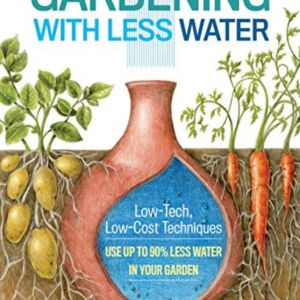
    Gardening with Less Water

    David A. Bainbridge

    Gardening with Less Water offers simple, inexpensive, low-tech techniques for watering your garden much more efficiently — using up to 90 percent less water for the same results. With illustrated step-by-step instructions, David Bainbridge shows you how to install buried clay pots and pipes, wicking systems, and other porous containers that deliver water directly to a plant’s roots with little to no evaporation. These systems are available at hardware stores and garden centers; are easy to set up and use; and work for garden beds, container gardens, and trees.This book would be an excellent resource for 6th-12th grade educators looking to provide water conservation engineering challenges for their students.This book must be returned.
  • Incubator [Washington County]Login to Hold

    Total Available: 3 (of 20)

    Must be returned

    Incubator

    Brinsea

    There's limited availability for May! Please order on the website and email us to check availability!!Washington County educators: Please see this link for county-specific availability. Easy to use, high quality, egg incubators.  All your students can watch eggs hatch...every time. Before you undertake hatching eggs in your classroom, Oregon Agriculture in the Classroom Foundation strongly recommends you educate yourself on the requirements for successfully hatching eggs and caring for chicks. PLEASE READ "Checking Out Incubators" through to the agreement below, before reserving your incubator.Resources: Shipping to you is free but you are responsible for return shipping.  Shipping costs can range from $13-$22.Checking Out Incubators
    • Incubators are checked out on a first come, first serve basis.  It is highly recommended you reserve your incubators well in advance.
    • We highly encourage at least 12 students will be involved in the incubation process. If you have questions on whether or not you qualify, please call the office at 541-737-1318.
    • Incubators can be checked out for five weeks.  This check out time frame is intended for chicken eggs; if you plan on hatching a different species, please let us know so we can adjust the time accordingly. Be sure to have ordered eggs ahead of time.  Also the incubators need 24 hours of lead running time, before the eggs can be placed in them.
    • AITC does not supply eggs for incubation.  Fertile eggs may be purchased from farm supply stores or online.
    • Cleaning Cost: A fee of $25 will be charged if the unit is returned dirty.  AITC expects the unit to be returned as clean as it was shipped to you.
    • Late Fee: A fee of $25 will be charged if the unit is not returned on time.  These units are in high demand and AITC has limited resources to meet requests.  Therefore, cooperation in returning materials in a timely manner is extremely important.
    • In the comment section at checkout, please indicate 2-3 dates that you would like to receive the incubator.  A staff member will check your requested dates with incubator availability and email you to you confirming your order.
    Please be sure the following items are in the box upon return.  If something is damaged or missing you will be charged for the item or part as indicated. • Incubator: $199.99 • Egg Insert: $19.99 • Plug Top and Transformer: $19.99 • Water Pot Guard: $4.99 • Instruction Manual: $1.50 • If the incubator is not returned thoroughly clean, a $25 fee will be chargedBy checking out this item, I agree that I understand all outlined procedures, as well as terms and conditions, for checking out, using, and returning incubators.  I accept full responsibility for conditions under which chickens are kept, and promise to treat them humanely, give them adequate food, water, heating, and space, and find appropriate care for the chickens after they have been hatched and the classroom lesson is over.

  • Oregon Cherries PosterLogin to Hold

    Total Available: 136 (of 40)

    Does not need to be returned

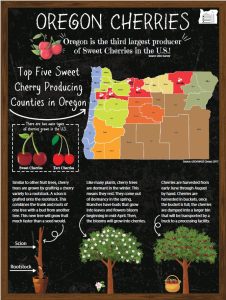
    Oregon Cherries Poster

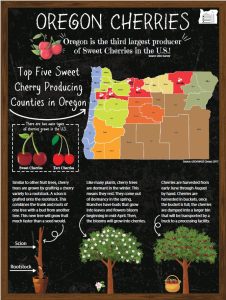
    This 1-sided 18x24" poster features Oregon's cherry industry. A great addition to celebrate the upcoming Spring season.
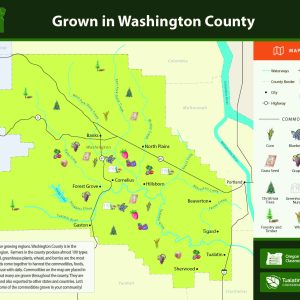
  • Grown in Washington County Map

    This beautiful 8.5 x 11 inch full color map of Washington County features unique commodities grown in the county. It is an excellent tool to bring a piece of the story one County plays in Oregon’s agricultural diversity to the classroom.The Grown in Washington County Map helps students visualize where things are grown right in their backyard. On the back of the map student's can learn some more information about the unique commodities grown in the County and how they support the diversity of Oregon agriculture.Maps are free to Oregon teachers. If you would like a classroom set please let us know how many to send!
  • Chinook Rubber Fish ReplicasLogin to Hold

    Total Available: 2 (of 4)

    Must be returned

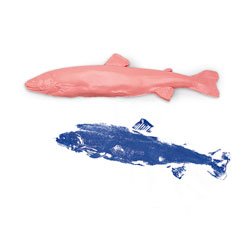
    Chinook Rubber Fish Replicas

    Get Oregonized

    After studying fish and their lifecycles in Oregon's Interior Valleys (chapter 7) in the Get Oregonized text, rubber fish replicas allow students to create beautiful Gyotaku (fish prints). These rubber fish replicas are of chinook salmon, perfect for after a lesson on the state fish!We currently have 2 fish available in our Washington County office.Please reach out to our current Washington County Programs Coordinator to check out this item, or to have them lead the activity in your classroom! 
  • 101 Common MossesLogin to Hold

    Total Available: 3 (of 5)

    Must be returned

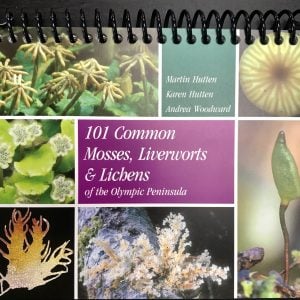
    101 Common Mosses, Liverworts & Lichens of the Olympic Peninsula

    Martin Hutten, Karen Hutten, Andrea Woodward

    This fun field guide will help students learn about the many different types of mosses, liverworts and lichens! The descriptions are very user friendly and include up-close pictures of each different plant form with details on their purpose and where they can be found. This item will need to be returned.
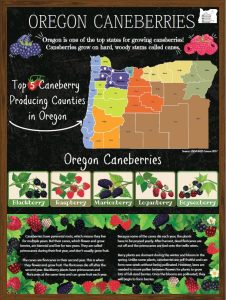
  • Oregon Caneberries PosterLogin to Hold

    Total Available: 144 (of 40)

    Does not need to be returned

    Oregon Caneberries Poster

    This 1-sided 18x24" poster features Oregon caneberries.
  • A Weed is a FlowerLogin to Hold

    Total Available: 1 (of 2)

    Must be returned

    A Weed is a Flower

    ALIKI

    George Washington Carver often said that a weed is a flower growing in the wrong place. He might have said this about himself. As the child of slaves, he grew up eager to learn, but was unable to find a school in his neighborhood that would accept black students. It was twenty years before he had enough money saved to go to college, but eventually George Washington Carver became a professor at the Tuskegee Institute in Alabama. There he was able to teach poor farmers the value of plants such as the sweet potato and the peanut - crops that were almost unknown at the time, but for which he invented hundreds of uses.Written and illustrated with affection for "a wonderful man who devoted his whole life to making life better for others," Aliki's biography tells the remarkable story of a great figure in African American history who is now recognized as the most prominent Black scientist of the early twentieth century. This book needs to be returned. 
  • Monocots and DicotsLogin to Hold

    Total Available: 7 (of 1000)

    Does not need to be returned

    Monocots and Dicots

    Oregon Agriculture in the Classroom

    In this lesson students set up a side-by-side germination experiment of monocot and dicot seeds. They will observe differences and similarities of these two types of flowering plants at the germination level, specifically the number of cotyledons. Students can record their findings daily. This is a great way to begin a flowering plant unit.This kit does not need to be returned.This Kit Includes:Grass seed, wheat seeds, bean seeds, zip lock bags, cotton balls, and a paper lesson planPlease put the number of students in your class in the quantity section at checkout to ensure the correct number of supplies gets to you.
  • PlaceholderLogin to Hold

    Total Available: 3 (of 1000)

    Does not need to be returned

    Grow a Bean in a Bag Kit

    Grow a bean in a bag using water beads! Each water bead is colored and represents the needs of plant for growth and development.This kit does not need to be returned. This Kit Includes:Water beads, jewelry bags, beans, and a paper lesson planPlease put the number of students in your class in the quantity section at checkout to ensure the correct number of supplies gets to you.