Oregon Agriculture in the Classroom Logo

Featured Resources

Categories

Type

Grade Level

  • Grown In Oregon Map PosterLogin to Hold

    Total Available: 467 (of 1000)

    Does not need to be returned

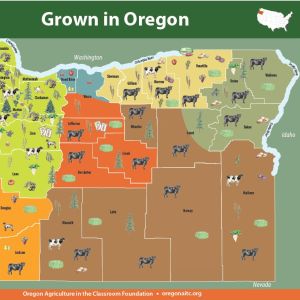
    Grown In Oregon Map Poster

    This beautiful 36 X 24 inch full color Oregon map features the leading and unique commodities grown in the state’s seven regions. It is an excellent tool to bring the story of Oregon’s agricultural diversity to the classroom.The Grown in Oregon Map helps students visualize where things are grown in our state and why. It is a great tool for teaching regions. It can be used to learn about counties, or for starting a discussion on nutrition and the abundance of healthy produce in our state.Maps are free to Oregon teachers. This item does not need to be returned.Non-teachers pay $10 for shipping and handling costs. To order map, Click HERE
  • Hungry Planet- What the World EatsLogin to Hold

    Total Available: 1 (of 2)

    Must be returned

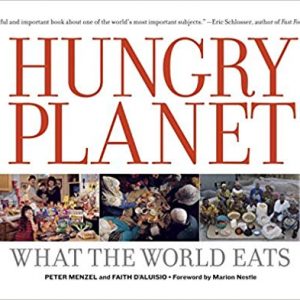
    Hungry Planet- What the World Eats

    Peter Menzel

    The age-old practice of sitting down to a family meal is undergoing unprecedented change as rising world affluence and trade, along with the spread of global food conglomerates, transform eating habits worldwide. HUNGRY PLANET profiles 30 families from around the world--including Bosnia, Chad, Egypt, Greenland, Japan, the United States, and France--and offers detailed descriptions of weekly food purchases; photographs of the families at home, at market, and in their communities; and a portrait of each family surrounded by a week's worth of groceries. Featuring photo-essays on international street food, meat markets, fast food, and cookery, this captivating chronicle offers a riveting look at what the world really eats. This book needs to be returned. 
  • Ag Today - Issue 4Login to Hold

    Total Available: 39 (of 400)

    Does not need to be returned

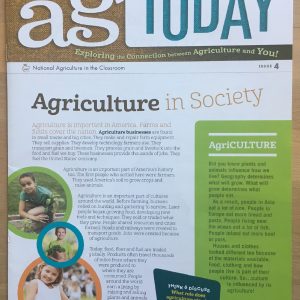
    Ag Today – Issue 4

    National Agriculture in the Classroom

    This six part series is a publication of National Agriculture in the Classroom. Issue four looks at how the global movement of agriculture products continue to be driven by economics, and consumer demand and preferences. Agriculture, food, and natural resource systems continue to play an integral role in the evolution of societies both in the United States and the world. Teacher guide is included.Check out the e-book version and online teacher guide! Please put the number of students in your class in the quantity section at checkout to ensure the correct number of supplies gets to you.Additional publications: Ag Today Issue 1, Ag Today Issue 2Ag Today Issue 3, Ag Today Issue 5, Ag Today Issue 6This item doe not need to be returned.
  • Inside Oregon's ForestsLogin to Hold

    Total Available: 1 (of 1)

    Must be returned

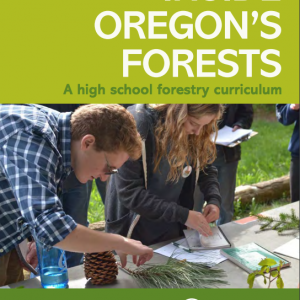
    Inside Oregon’s Forests

    Oregon Forest Resource Institute

    This book contains many lesson plans about forestry for high school students, including lessons on ecology and wildlife.
  • Life in the Forest: Get to know Oregon's forest wildlifeLogin to Hold

    Total Available: 93 (of 50)

    Does not need to be returned

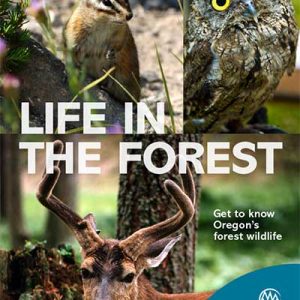
    Life in the Forest: Get to know Oregon’s forest wildlife

    Oregon Forest Resources Institue

    Life in the Forest is a 24-page, full-color publication designed to assist students in understanding how forests provide habitat for different wildlife species.   It highlights current wildlife research and presents data for students to analyze. It is aligned with the Next Generation Science Standards.
  • Where Should Development Go? MedfordLogin to Hold

    Total Available: 1 (of 4)

    Does not need to be returned

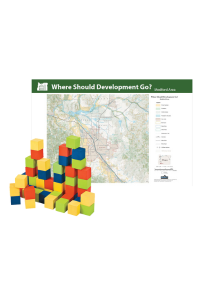
    Where Should Development Go? Medford

    Students learn about the challenges of planning for development while still protecting important farmland, forestland and wildlife habitat. This two-part lesson allows students to brainstorm creative solutions using critical thinking, math, teamwork and problem solving skills.This lesson includes six topography maps, a lesson and corresponding activity that has has colored blocks to complete it with. This item does not need to be returned.Download LessonDownload Activity  
  • Oregon Grown Fresh ProduceLogin to Hold

    Total Available: 14 (of 600)

    Does not need to be returned

    Oregon Grown Fresh Produce

    Oregon Department of Agriculture

    This colorful Oregon Grown Fresh Produce poster includes the 26 specialty crops that are seasonally available within Oregon. This 18x36 inch poster was created by watercolor artist Abigail Waring for the Oregon Department of Agriculture.This item does not need to be returned.
  • Oregon's Seasonal HarvestLogin to Hold

    Total Available: 12 (of 225)

    Does not need to be returned

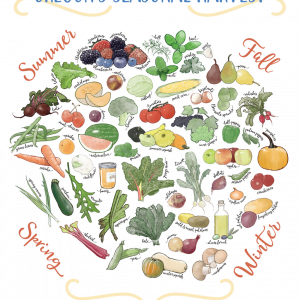
    Oregon’s Seasonal Harvest

    Oregon Department of Agriculture

    This Oregon's Seasonal Harvest poster with original illustrations celebrates 63 of Oregon's diverse specialty crops!This item does not need to be returned.
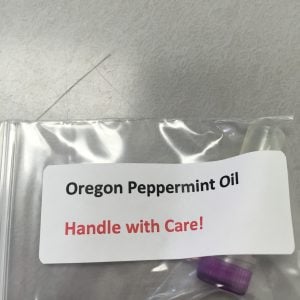
  • Peppermint Oil

    Peppermint oil is provided for making peppermints from the No Cook Peppermints lesson.1-2 drops of oil will make approximately 75 candies.**No need to return the vial.
  • SFC's Grow Local School Garden Activity GuideLogin to Hold

    Total Available: 2 (of 3)

    Must be returned

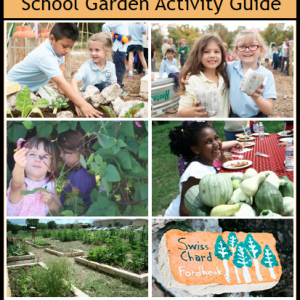
    SFC’s Grow Local School Garden Activity Guide

    Sustainable Food Center

    The Grow Local program's School Garden Activity Guide offers 23 hands-on activities for gardening, food systems, and cooking designed primarily for upper elementary and middle school, with extensions for older grades available. The activities can be used with multiple academic subjects and may take place inside the classroom and outside in the school garden.
  • SFC's Grow Local School Garden Start-Up GuideLogin to Hold

    Total Available: 2 (of 3)

    Must be returned

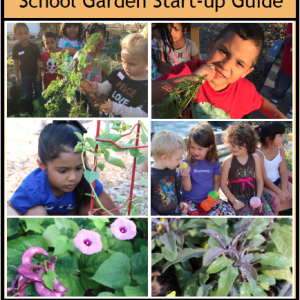
    SFC’s Grow Local School Garden Start-Up Guide

    Sustainable Food Center

    SFC's Grow Local program's School Garden Start-up Guide offers steps for starting and sustaining a successful school garden. A school garden is a valuable tool for hands-on classroom learning for a wide variety of subjects. This guide focuses on getting organized, designing the garden, building and caring for the garden, managing the garden, and sustaining the garden.
  • Teacher's Guide to The Man Who Fed the WorldLogin to Hold

    Total Available: 2 (of 2)

    Must be returned

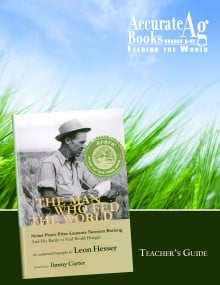
    Teacher’s Guide to The Man Who Fed the World

    American Farm Bureau Foundation for Agriculture

    How do we cultivate a sustainable future for Earth’s growing population? What role does agriculture play in ensuring food security? These are questions students will answer as they study The Man Who Fed the World. The teacher’s guide to the book contains modules and instructional materials designed to help high school students examine the elements of sustainable international development efforts, specifically with respect to the role agriculture plays in spurring economic transformation and growth in developing countries. Through reading The Man Who Fed the World, a biography about Nobel Peace Prize Laureate Norman Borlaug by Leon Hesser, students gain a firsthand account of the Green Revolution. The selected readings from the book illustrate a concrete example of a past international development effort for students to analyze from multiple perspectives, including its impact on food production, economic transformation, government policies, technological research and development, and the environment. At the end of the lesson, students will articulate a position, informed by fact, regarding how modern agriculture can be applied to sustainably accommodate Earth’s growing population through future development efforts.
  • The Book of Gardening Projects for KidsLogin to Hold

    Total Available: 1 (of 2)

    Must be returned

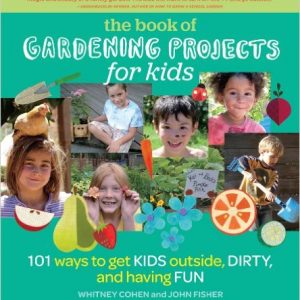
    The Book of Gardening Projects for Kids

    Whitney Cohen, John Fisher

    Many gardeners find that once they have children, gardening goes the way of late-night dinner parties and Sunday morning sleep-ins. Raising kids and maintaining a garden can be a juggling act, leaving the family garden forgotten and neglected. But kids can make great gardening companions, and the benefits of including them are impossible to ignore. Gardening gets kids outdoors and away from television and video games, increases their connection to plants and animals, and helps build enthusiasm for fresh fruits and vegetables. Their involvement becomes the real harvest of a family garden. This book needs to be returned. 
  • The Happy Kitchen CookbookLogin to Hold

    Total Available: 2 (of 2)

    Must be returned

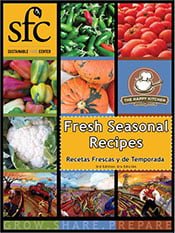
    The Happy Kitchen Cookbook

    SFC

    Over 100 fresh, seasonal recipes that are quick, easy-to-prepare, delicious and affordable. Recipes are in both English and Spanish.Más de 100 recetas de temporada que están rápidas, fáciles de preparar, ricas y económicas. Las recetas están en inglés y español.
  • The Soul of SoilLogin to Hold

    Total Available: 1 (of 1)

    Must be returned

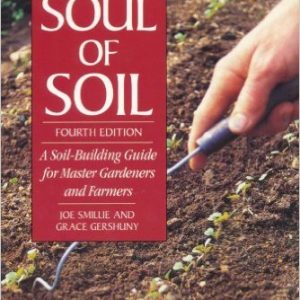
    The Soul of Soil

    Grace Gershuny, Joe Smillie

    This a sensible book, well-focused, and highly readable handbook that provides essential information on the care of our most precious resource, our soil. Soil-building techniques include: organic matter management; on-site composting; cultivation and weed control; green manures and rotations; nutrient balances and soil testing; planning for organic certification. The Soul of Soil is more relevant than ever as the importance of organic certification is becoming widely recognized. This book needs to be returned. 
  • The Story of FoodLogin to Hold

    Total Available: 1 (of 1)

    Must be returned

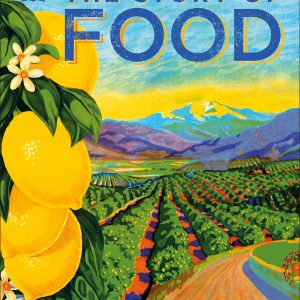
    The Story of Food

    DK

    This glorious visual celebration of food in all its forms reveals the extraordinary cultural impact of the foods we eat, explores the early efforts of humans in their quest for sustenance, and tells the fascinating stories behind individual foods. With profiles of the most culturally and historically interesting foods of all types, from nuts and grains, fruits and vegetables, and meat and fish, to herbs and spices, this fascinating culinary historical reference provides the facts on all aspects of each food's unique story. Feature spreads shine a spotlight on influential international cuisines and the local foods that built them. The Story of Food explains how foods have become the cornerstone of our culture, from their origins to how they are eaten and their place in world cuisine.The Story of Food is packed with sumptuous and evocative images that create a feast for the eyes, while the stories intrigue, surprise, and enthrall, making it the perfect gift for food lovers, cooks, gourmets, and history lovers with a penchant for food.