Oregon Agriculture in the Classroom Logo

Featured Resources

Categories

Type

Grade Level

  • Beef By-Products Source RelayLogin to Hold

    Total Available: 12 (of )

    Does not need to be returned

    Beef By-Products Source Relay

    Many students think products simply come from factories or stores. This hands-on activity helps students understand that before an item ever leaves a factory or enters a store, it begins as a resource or product in the natural world. More specifically, these products can all be traced back to one unassuming animal, the cow! In the Beef By-Product Source Relay, students will work in teams and run a relay race where they will quickly decide the source of a product and then race to place it into one of the buckets marked Factory, Farm, Store, Earth, or Cow.
  • Eggs: Supply and DemandLogin to Hold

    Total Available: 8 (of )

    Does not need to be returned

    Eggs: Supply and Demand

    In this lesson, students are introduced to the concepts of supply and demand as it pertains to the school kitchen. Students will explore factors affecting egg production and how supply and demand influence the price and availability of eggs. Students will role-play as poultry farmers and egg consumers to analyze real-world scenarios, observe the impact on egg supply, and make suggestions to their school’s kitchen staff. Lesson Plan & Activity Sheet
  • Desktop GreenhousesLogin to Hold

    Total Available: 14 (of )

    Does not need to be returned

    Desktop Greenhouses

    Students investigate the importance of light to plants by creating a desktop greenhouse investigation and exploring the process of photosynthesis. This kit includes materials for six groups of students.For more resources and lesson plan: Desktop Greenhouses
  • Science in Your Shopping CartLogin to Hold

    Total Available: 98 (of )

    Does not need to be returned

    Science in Your Shopping Cart

    Science in Your Shopping Cart shows us just how much science is behind the everyday items we use, eat, and wear. In the United States, we pay less for food than almost any other country. Every year, researchers introduce dozens of new and improved varieties of fruits, vegetables, and other products. But as we walk through the grocery store, do we ever stop to think about where this incredible abundance and variety comes from? This book helps us understand the science that makes it all possible.
  • Gardening with Less WaterLogin to Hold

    Total Available: 1 (of )

    Must be returned

    Gardening with Less Water

    David A. Bainbridge

    Gardening with Less Water offers simple, inexpensive, low-tech techniques for watering your garden much more efficiently — using up to 90 percent less water for the same results. With illustrated step-by-step instructions, David Bainbridge shows you how to install buried clay pots and pipes, wicking systems, and other porous containers that deliver water directly to a plant’s roots with little to no evaporation. These systems are available at hardware stores and garden centers; are easy to set up and use; and work for garden beds, container gardens, and trees.This book would be an excellent resource for 6th-12th grade educators looking to provide water conservation engineering challenges for their students.This book must be returned.
  • Under Your FeetLogin to Hold

    Total Available: 2 (of )

    Must be returned

    Under Your Feet

    Wenjia Tang

    Under Your Feet delves beneath the Earth's surface and explores the diverse wonders hidden there. Encounter creatures of the deep and marvel at the mind-boggling size of the humongous fungus - the biggest organism in the world. Learn how one handful of ordinary soil contains more organisms than there are people on Earth, and carry out experiments using dirt from your own back garden. Under Your Feet offers you the opportunity to expand your knowledge of the natural world and soil-dwelling creatures big and small. Bursting with colorful illustrations and photography, this is the perfect book for budding young plant experts, animal fanatics, and geologists, and anyone who is curious about the ground we walk on.
  • AgBadging Field GuideLogin to Hold

    Total Available: 428 (of 70)

    Does not need to be returned

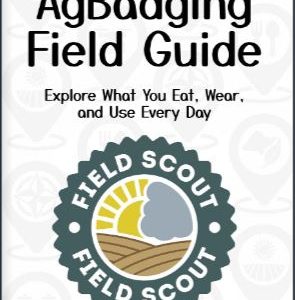
    AgBadging Field Guide

    The AgBadging Field Guide leads students through an in-depth exploration of agriculture. Students have the opportunity to obtain five badges while learning about the food, fiber and resources that support our daily lives.This resource is intended for homeschool only. 
  • Incubator [Washington County]Login to Hold

    Total Available: 11 (of 20)

    Must be returned

    Incubator

    Brinsea

    There's limited availability for May! Please order on the website and email us to check availability!! Easy to use, high quality, egg incubators.  All your students can watch eggs hatch...every time. Before you undertake hatching eggs in your classroom, Oregon Agriculture in the Classroom Foundation strongly recommends you educate yourself on the requirements for successfully hatching eggs and caring for chicks. PLEASE READ "Checking Out Incubators" through to the agreement below, before reserving your incubator.Resources: Shipping to you is free but you are responsible for return shipping.  Shipping costs can range from $13-$22.Checking Out Incubators
    • Incubators are checked out on a first come, first serve basis.  It is highly recommended you reserve your incubators well in advance.
    • We highly encourage at least 12 students will be involved in the incubation process. If you have questions on whether or not you qualify, please call the office at 541-737-1318.
    • Incubators can be checked out for five weeks.  This check out time frame is intended for chicken eggs; if you plan on hatching a different species, please let us know so we can adjust the time accordingly. Be sure to have ordered eggs ahead of time.  Also the incubators need 24 hours of lead running time, before the eggs can be placed in them.
    • AITC does not supply eggs for incubation.  Fertile eggs may be purchased from farm supply stores or online.
    • Cleaning Cost: A fee of $25 will be charged if the unit is returned dirty.  AITC expects the unit to be returned as clean as it was shipped to you.
    • Late Fee: A fee of $25 will be charged if the unit is not returned on time.  These units are in high demand and AITC has limited resources to meet requests.  Therefore, cooperation in returning materials in a timely manner is extremely important.
    • In the comment section at checkout, please indicate 2-3 dates that you would like to receive the incubator.  A staff member will check your requested dates with incubator availability and email you to you confirming your order.
    Please be sure the following items are in the box upon return.  If something is damaged or missing you will be charged for the item or part as indicated. • Incubator: $199.99 • Egg Insert: $19.99 • Plug Top and Transformer: $19.99 • Water Pot Guard: $4.99 • Instruction Manual: $1.50 • If the incubator is not returned thoroughly clean, a $25 fee will be chargedBy checking out this item, I agree that I understand all outlined procedures, as well as terms and conditions, for checking out, using, and returning incubators.  I accept full responsibility for conditions under which chickens are kept, and promise to treat them humanely, give them adequate food, water, heating, and space, and find appropriate care for the chickens after they have been hatched and the classroom lesson is over.

  • Humongous FungusLogin to Hold

    Total Available: 1 (of 2)

    Must be returned

    Humongous Fungus

    Lynne Boddy

    Did you know that fungi can be grown to make medicine for humans? Or that the most mushrooms can be seen in autumn? This picture book about nature is packed with fun facts about fungi. It includes gross-out stories of fungal infections that kids will love, incredible facts about "bananageddon", crop disease, epidemics, and zombified ants! It’s the ultimate gift for children who are interested in nature and microorganisms. Book must be returned.
  • Grown in Washington County Map

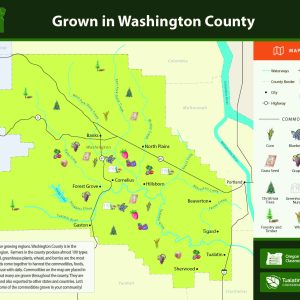
    This beautiful 8.5 x 11 inch full color map of Washington County features unique commodities grown in the county. It is an excellent tool to bring a piece of the story one County plays in Oregon’s agricultural diversity to the classroom.The Grown in Washington County Map helps students visualize where things are grown right in their backyard. On the back of the map student's can learn some more information about the unique commodities grown in the County and how they support the diversity of Oregon agriculture.Maps are free to Oregon teachers. If you would like a classroom set please let us know how many to send!
  • PlaceholderLogin to Hold

    Total Available: 22 (of 20)

    Does not need to be returned

    Cultures, Food and Communities Around the World Kit

    Students explore different cultures around the world, compare worldwide communities with local communities, and explain the interrelationship between the environment and community development. This kit includes a class set of: 37 Lunch cards and a world map. This kit does not need to be returned.
  • Holiday Foods & Oregon Christmas Trees PosterLogin to Hold

    Total Available: 99 (of 40)

    Does not need to be returned

    Holiday Foods & Oregon Christmas Trees Poster

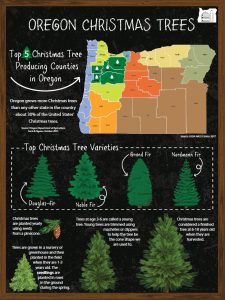
    This 2-sided 18x24" poster features holidays around the world with important food dishes to the culture. The backside features information on Oregon Christmas trees highlighting top varieties and the life cycle.
  • 'Til The Cows Come HomeLogin to Hold

    Total Available: 20 (of 19)

    Must be returned

    ‘Til The Cows Come Home

    Jodi Icenoggle

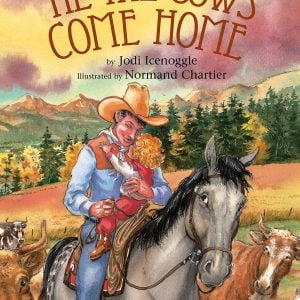
    The author lassos a traditional Jewish folktale, "The Button Story", sets it in the American West, and rigs it up with tongue-tingling cowboy language to create an engaging story. A young cowboy, gifted in making saddles and bridles, receives a sturdy, soft-as-silk piece of leather from a grateful cowpuncher and stitches it into a pair of "whoopi-ti-yi-yo chaps." Follow the leather through the young cowboy’s life. The companion book to the Ag Tag Matching Game lesson plan and the Ag Tag Matching Game Kit. Please check the kit out separately. This book needs to be returned. 
  • Living Necklace Kit

    Grow your own necklace! This kit contains materials for your students to plant a seed in a jewel bag attached to yarn, thus creating a "living necklace." Given time and water, the necklace will be alive with a growing sprout in a few days. An excellent activity for teaching plant growth requirements. Kit includes: yarn, cotton ball, bean seed and plastic bag. Click here for lesson plan.This kit does not need to be returned. This Kit Includes:Yarn, beans, jewel bags, cotton balls, and a paper lesson planPlease put the number of students in your class in the quantity section at checkout to ensure the correct number of supplies gets to you.
  • SeedLogin to Hold

    Total Available: 10 (of 12)

    Must be returned

    Seed, Soil, Sun

    Cris Peterson

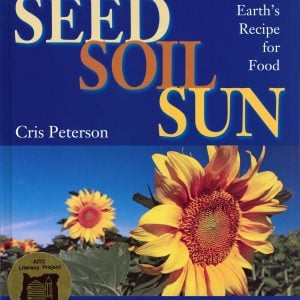
    Seed. Soil. Sun. With these simple ingredients, nature creates our food. This beautifully written book by Cris Peterson, brings both wonder and clarity to the subject of agriculture, celebrating the cycle of growth, harvest, and renewal. The photography that conveys this story is a perfect fit for this story. The companion book to the Seed, Soil, Sun lesson plan and the Seed, Soil, Sun Kit. Please check the kit out separately.
  • The Art of Food: Plant Pigments and TanninsLogin to Hold

    Total Available: 10 (of )

    Does not need to be returned

    The Art of Food: Plant Pigments and Tannins

    When we think of farmers in Oregon producing popular crops such as beets, blueberries, hazelnuts, onions, and grapes, we might not first think of art supplies. However, these food crops, along with many other plant materials, often find their way into the art studio! Many paints, drawing tools, and fabric dyes contain pigments and tannins, which come from agricultural commodities, even rock and soil! This lesson allows students to utilize foods and other plant materials to discover exciting, naturally occurring colors growing in their gardens or school yards.

    Download Lesson Plan here: The Art of Food Plant Pigments and Tannins